1939
|
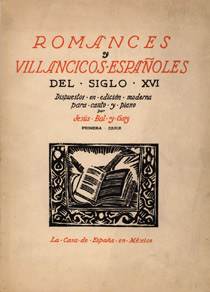
Coming from Paris, Rosita joined her husband in Mexico. The Casa de España published his edition of Romances y villancicos españoles del siglo XVI.
|
1940
|
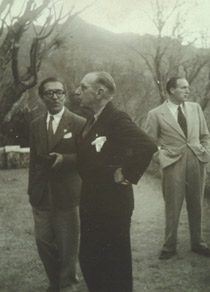
He met Igor and Vera Stravinsky, and they became friends. He collaborated with the British Propaganda Office in Mexico and began publishing articles on music criticism in El Universal of Mexico D. F., a collaboration that will last for eleven years |
1942
|
Premiere of his Serenata para cuerdas and Cuatro piezas para canto y piano |
1944
|
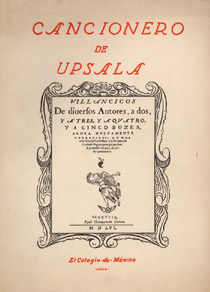
He published the Cancionero de Upsala |
1945
|
| He wrote Tres piezas para Gran Orquesta |
1946
|
| He was one of the founding members of the periodical Nuestra Música , and published several articles, Rodolfo Halffter I among them. Premiere of his Divertimento para cuarteto de maderas. He stated composing Hojas de album, finishedin 1948 |
1947
|
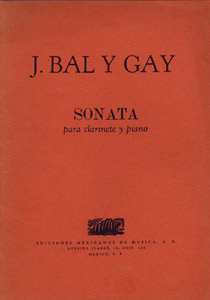
He was appointed director of the Music Research Department at the Instituto Nacional de Bellas Artes (INBA). He wrote Sonata para clarinete y piano and the ballet Quijote in collaboration with Carlos Chávez and Blas Galindo. He composed Oda a don Quijote para pequeño grupo orquestal and continued his collaboration with Nuestra Música. Premiere of his Fantasía para dos violas in the Conciertos de los Lunes atSala Schiefer. He orchestrated Johann Sebastian Bach’s Brandenburg Concerto nº 6 |
1949
|
He wrote Epigrama a Carlos Chávez para piano |
1950
|
He composed the song “Leñador, no tales el pino”
|
1951
|
| He wrote Concerto grosso, para flauta, oboe, clarinete, fagot y orquesta |
1952
|
| He published Tesoro de la Música Polifónica en México (Mexico, INBA) |
1955
|
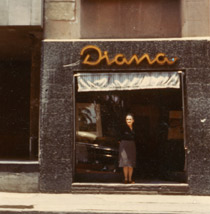
Jesús Bal and Rosita García Ascot opened the art gallery Diana where artists such as Vera Stravinsky and Remedios Varo exhibited their works |
1957
|
Jesús Bal joined the managing staff of the Radio de la Universidad Nacional Autónoma de México (UNAM). He published articles in the Revista de la Universidad de México until 1961 |
1958
|
He taught courses on music appreciation at the UNAM until 1964 |
1959
|
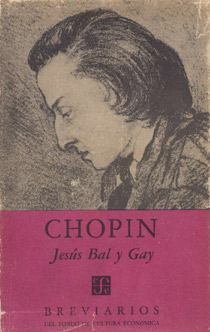
He published Chopin in Fondo de Cultura Economica, Mexico |
1960
|
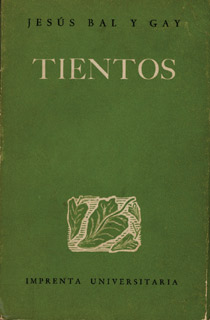
He published “Tientos (ensayos de estética musical)” at UNAM, and La aventura balear de Chopin, a limited edition of 50 copies paid by him |
1961
|
| He joined the UNAM’s Instituto de Investigaciones Estéticas as a researcher |
1962
|
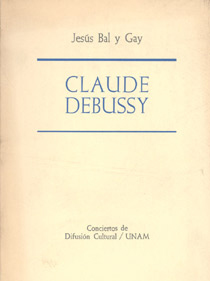
He traveled to Spain. In Mexico, the UNAM published his Debussy |
1964
|
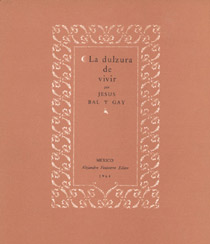
| He retired in Mexico and published La dulzura de vivir, edited by Alejandro Finisterre |
|
1965
|
He returned to Spain and settled in Madrid. He taught composition in the "Música en Compostela" courses |
1973
|
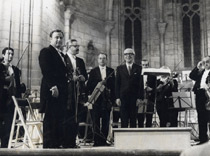
The National Orchestra of Spain (ONE), conducted by Frübeck de Burgos, premiered his Serenata para orquesta de cuerdas In Lugo on 18 June
|
1974
|
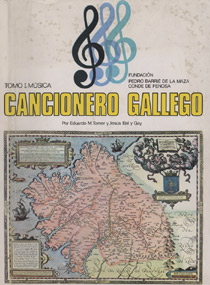
The Fundación Barrié de la Maza, in La Coruña, published Cancionero gallego, by Eduardo Martínez Torner and Jesús Bal |
1976
|
The Press Association of Lugo selected him as “Lucense del año”
(man of the year of that town.) |
1982
|
The Ateneo de Madrid honored him |
1984
|
Grugalma (Grupo Galicia in Madrid), in collaboration with the Madrid City Council, paid him a tribute |
1989
|
Jesús Bal and Rosita García Ascot received the Award for Musical Creativity of the Comunidad of Madrid |
1990
|
| Nuestros trabajos y nuestros días was published, edited by Antonio Buxán |
1993
|
| Jesús Bal y Gay died on March 3 |