Américo Castro
(Cantagallo, Brasil, 1885 - Lloret de Mar, Barcelona, 1972) |
| 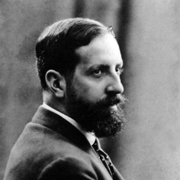 Américo Castro was born in Brazil to Spanish parents. He graduated from the University of Granada, and then studied at the Sorbonne and in Germany. He was a disciple and friend of Giner de los Ríos, and Menéndez Pidal. When the Center for Historical Studies (Centro de Estudios Históricos) was founded in 1910 in Madrid, he headed the department of Lexicography. In1915, he became a professor of History of the Spanish Language at the Universidad Central. The government of the Spanish Republic appointed him ambassador to Germany in 1931. When the Civil War broke out in 1936, he moved to the United States and taught at Princeton from 1940 to 1953, when he retired. Américo Castro was born in Brazil to Spanish parents. He graduated from the University of Granada, and then studied at the Sorbonne and in Germany. He was a disciple and friend of Giner de los Ríos, and Menéndez Pidal. When the Center for Historical Studies (Centro de Estudios Históricos) was founded in 1910 in Madrid, he headed the department of Lexicography. In1915, he became a professor of History of the Spanish Language at the Universidad Central. The government of the Spanish Republic appointed him ambassador to Germany in 1931. When the Civil War broke out in 1936, he moved to the United States and taught at Princeton from 1940 to 1953, when he retired.
His philological research focused on the origins of the Castilian language and the history of literature, especially the Golden Age (Lope de Vega, Tirso de Molina, Quevedo, and Cervantes). His ambitious and controversial books, such as La realidad histórica de España (México, 1954), Origen, ser y existir de los españoles (Madrid, 1959), and De la edad conflictiva (Madrid, 1961) had a great impact.
In his famous feud with Sánchez-Albornoz, Castro maintained that the peculiarity of Spanish identity had its origins in the medieval coexistence of three races and religions, Christians, Jews and Muslims. Even after the expulsion of the Jewish and Muslim minorities by Ferdinand and Isabella, they continued to be present as "castes" of conversos and moriscos. Castro defended the existence of a national essence that he called the “morada vital” of Spanish "soul." He maintained that this “selfhood” provoked a constant, agonizing conflict in Spanish society, and explained basic features of the country's history, including 19th and 20th century’s political movements, such as regionalism and anarchism.
|
