Antonio Flórez Urdapilleta |
|
In 1911, he won the competition for the construction of the Froebel School in Pontevedra. In 1913, he designed the new buildings of the Residencia de Estudiantes (established by the Junta para Ampliación de Estudios) on Pinar St., in Madrid. In 1915, he finished building the Twin pavilions (the residents’ dooms), and the Transatlántico As a member of the Patronato de la Reina Victoria Eugenia In 1919, Flórez was appointed advisor of Public Education. A year later, he was designated chief architect of the newly created Oficina Técnica de Construcciones Escolares (School Building Technical Office) of the Ministry of Public Education and Fine Arts. He did an extraordinarily fruitful work in the field of school architecture that was cut short by the Civil War. He was elected member of the Real Academia de Bellas Artes de San Fernando in 1932. His acceptance speech dealt with architectural education. The years the Civil War were extremely distressing for him since he was dismissed from his position at the School Building Technical Office by the government of the Republic in 1937, and then by General Franco’s government in 1939. His professional career was reduced to teaching. |
| Salvador Guerrero |
| Source: El laboratorio de España. La Junta para Ampliación de Estudios e Investigaciones Científicas (1907-1939), catalog. |
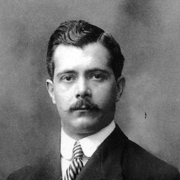 Antonio Flórez Urdapilleta, son of architect Justino Flórez Llamas, studied at the Institución Libre de Enseñanza with Manuel Bartolomé Cossío as his teacher, and Antonio Machado among his classmates. He graduated from the School of Architecture in Madrid in 1904 and got a fellowship at the Academia de España in Rome the same year. He traveled throughout Italy, Greece, Turkey, and Vienna. Back in Spain, he started teaching at the School of Architecture and eventually became a professor of Ornamental Elements.