Ramón Menéndez Pidal |
|
In May 1900, despite the opposition from his conservative family, Pidal married María Goyri, one of the first Spanish women who studied in the university. Strongly influenced by the ideals of the Institución Libre de Enseñanza, Goyri chose to collaborate with her husband in all his projects, keeping a discreet position in the background. During their honeymoon, the couple found the romancero preserved by the oral tradition in Castile. Pidal began to be recognized at home and in1902 he was elected member of the Royal Spanish Academy (he became member the Academy of History ten years later). His prestige was such that King Alfonso XIII appointed him royal commissioner to mediate in the border conflict between Peru and Ecuador in 1904. His publications during that period include: Manual de gramática histórica española (1903), El dialecto leonés (1906), his edition of the Primera Crónica General de España (1906), and the Cantar de Mío Cid (1908-1911) Pidal was deeply committed to the advancement of science in Spain and became a member of the Junta para la Ampliación de Estudios (JAE), where he held several positions, such as chair of the Steering Committee of the Residencia de Estudiantes (1910), and chairman of the board of the Instituto-Escuela (1928). In 1910, he organized the Center for Historical Studies (CEH), the leading research institution in the humanities. The Center incorporated prominent philologists, such as Tomás Navarro Tomás, Américo Castro, Antonio García Solalinde, Amado Alonso, Dámaso Alonso, Samuel Gili Gaya, and Rafael Lapesa, and began the publication of the prestigious Revista de Filología Española in 1914. Pidal’s research contributions brought him numerous honorary degrees (doctor honoris causa by the universities of Toulouse, Oxford, the Sorbonne...) In 1925, he was elected director of the Royal Spanish Academy, a position he held until 1939. His political commitment was also very open: Don Ramon made several protests against Primo de Rivera’s dictatorship for its interference in the functioning of the Royal Academy, its persecution of the Catalan language and, above all, its attempts to match private and public universities. After the proclamation of the Second Republic, Pidal assumed new responsibilities as rector of the International Summer University of Santander, and vice president of the JAE, among others. However, he did not neglect his philological research and, during this period, he published major works, such as Poesía juglaresca y juglares (1925), La España del Cid (1929), and especially his monumental Orígenes del español (1926). He also began planning the Linguistic Atlas of the Iberian Peninsula, but this ambitious project was interrupted, like the rest of his projects, by the outbreak of the Civil War. He was in Madrid but, concerned about the violent events he witnessed, he left Spain in late1936 and did not return until July 1939. Upon his return, nothing was the same. The Tribunal de Responsabilidades Políticas (Court of Political Responsibility) set in motion a legal process against him and forced him to relinquish his post as president of the Royal Academy. The CEH was dismantled, many of Pidal’s disciples were exiled or persecuted, and he withdrew into his home in Chamartín (Madrid) to continue his work. However, Pidal signed several manifestos in opposition to Franco’s régime and, although his international reputation protected him, it did not protect him from attacks of the most intolerant and reactionary elements of society. In 1947, he regained his post as director of the Royal Academy, a position he held until his death, but the only support for his projects came from his family (his wife died in 1954). During the last years of his life, he worked on his unfinished history of the epic and history of language, published major works, such as Reliquias de la poesía épica española (1951), Toponimia prerrománica hispana (1952), Romancero hispánico (1953), Poesía juglaresca y orígenes de las literaturas románicas (1957), and La Chanson de Roland y el neotradicionalismo (1959), although some of his books, such as El padre Las Casas. Su doble personalidad, (1963), were very controversial. In March 1965, he suffered a cerebral thrombosis that weakened his mental powers. He died three years later. |
| José Ignacio Pérez Pascual |
| Source: El laboratorio de España. La Junta para Ampliación de Estudios e Investigaciones Científicas (1907-1939), catalog |
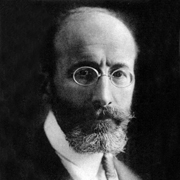 Ramón Menéndez Pidal’s family came from Asturias and settled in Oviedo shortly after Ramón’s birth. He studied philosophy at the University of Madrid and finished his Ph.D. in 1892. His first research work, “Texto, gramática y vocabulario de Poema del Cid,” won a contest sponsored by the Royal Spanish Academy in 1895. His first publications, La leyenda de los infantes de Lara (1896), and Crónicas generales de España (1898), did not received a wide recognition in Spain, but earned him the respect of the most prestigious European hispanists. In December 1899, he obtained the chair of Romance Philology at the University of Madrid, a position that he held until his retirement in 1939.