Severo Ochoa |
|
He enrolled in the Faculty of Medicine of Madrid in 1923. After graduating in 1929, Ochoa went with a grant from the Junta para Ampliación de Estudios (JAE) to work under Otto Meyerhof at the Kaiser Wilhelm Institut für Medizinische Forschung at Heidelberg. He focused his research during this period on the biochemistry and physiology of muscle. In 1935, he joined the Laboratory of Physiology headed by Professor Juan Negrín at the Residencia de Estudiantes in Madrid. He left Madrid during the Civil War and returned to Heidelberg as guest research assistant in Meyerhof’s laboratory. With Hitler’s rise to power, Meyerhof had to leave his country, and Ochoa moved to England, first to Plymouth and then to Oxford, to work with Rudolf Peters. When Britain joined the Allies in World War II, Ochoa moved to Mexico. Sponsored by the Rockefeller Foundation, he entered the United States and worked with Carl and Gerty Cori on enzymology at Washington University School of Medicine, St. Louis (Missouri). In 1942, he was appointed research associate in Medicine at the New York University School of Medicine and there subsequently became Assistant Professor of Biochemistry (1945), Professor of Pharmacology (1946), Professor of Biochemistry (1954), and Chairman of the Department of Biochemistry. He became an American citizen in 1956. During those years, he achieved wide recognition in the U.S. for his research on enzymatic processes in biological oxidation and synthesis and the transfer of energy. His research has contributed much to the knowledge of the basic steps in the metabolism of carbohydrates and fatty acids, the utilization of carbon dioxide, and the biosynthesis of nucleic acids. He also worked on the citric acid cycle, or tricarboxylic acid cycle (the Krebs cycle), a series of enzyme-catalyses chemical reactions, which is of central importance in all living cells that use oxygen as part of cellular respiration. In 1955, while researching high-energy phosphates with his assistant, Marianne Grunberg-Manago, Ochoa discovered an enzyme in bacteria that enabled him to synthesize RNA. It has been valuable in enabling scientists to understand and recreate the process whereby the hereditary information contained in genes is translated into enzymes that determine each cell's functions and character. His discovery earned him the Nobel Prize in Medicine (1959), which was shared with his collaborator in the postwar period, Arthur Kornberg, who received it for his discovery of the mechanisms in the biological synthesis of DNA. After that date, Ochoa began his contacts with the Spanish authorities and with the small but steadily thriving research community in Spain working on biochemistry and molecular biology. He continued his research on deciphering the genetic code in constant competition with the team headed by Marshall Nirenberg, who had published break through results in 1961. Ochoa, in collaboration with Margarita Salas, conducted research on the biosynthesis of protein, whose mechanisms were formulated as "reading" the genetic code, a field on which he worked until the end of his life. Ochoa’s laboratory became a training center for young scientists, including a growing number of Spanish physiologists. He agreed to collaborate with José Luis Villar Palasí’s team, in the Ministry of Education and Science, to establish a research institute for molecular biology, which was the embryo of the Centro de Biología Molecular Severo Ochoa, opened in 1975. He chaired meetings of Spanish biochemists since 1961 and was an active member of the Spanish Society of Biochemistry since it was founded in 1963. After his retirement from the University of New York in 1973, he moved to the Roche Institute of Molecular Biology in Nutley (New Jersey). When he retired from the Roche Institute, he finally returned to Spain in 1986, and settled in Madrid. |
| María Jesús Santesmases |
| Source: El laboratorio de España. La Junta para Ampliación de Estudios e Investigaciones Científicas (1907-1939), catalog. |
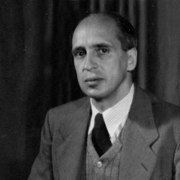 Severo Ochoa is one of the Spanish scientists who most contributed to the development of biological research in the 20thcentury. Ochoa is best known for being the first to synthesize ribonucleic acid (RNA) outside the cell. He also discovered several important metabolic processes. For his work with RNA, he was awarded the 1959 Nobel Prize in Physiology or Medicine.