Alfonso Reyes |
|
In Madrid, Reyes began an intensive literary career. He published books such as Visión de Anáhuac (1917), and Ifigenia cruel (1923). He started working at the Center for Historical Studies, where his colleagues were Américo Castro, Federico de Onís, Tomás Navarro Tomás, Antonio G. Solalinde, and Pedro Salinas, among others. He was a friend of Alberto Jiménez Fraud, José Moreno Villa, and Juan Ramón Jiménez, and was regular visitor at the Residencia de Estudiantes. He stated the deep admiration he felt for the new Spain that he saw being forged around him, a Spain whose civilized spirit of reform Reyes associated directly with Don Francisco Giner de los Rios. In 1924, Reyes was appointed Mexico's ambassador to Argentina. He never returned to Spain, but after 1939, when Mexico began to receive the first ships with refugees from the Spanish Civil War, Reyes, in his capacity as chairman of the House of Spain in Mexico, which later became the Colegio de Mexico, had the opportunity to provide shelter and jobs to many of his old friends in Madrid. Moreover, the intellectual profile of the College of Mexico under his direction followed in many respects the characteristics of the Center for Historical Studies. His death was a significant loss for Spain. |
| James Valender |
| Source: El laboratorio de España. La Junta para Ampliación de Estudios e Investigaciones Científicas (1907-1939), catalog. |
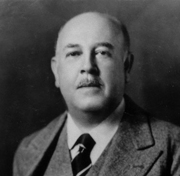 Alfonso Reyes moved from his hometown to Mexico City when he was 16 to study law at the Escuela Nacional Preparatoria. On 9 February 1913, with the country already immersed in a bloody revolution, his father, General Bernardo Reyes, was shot for his revolt against the president, Francisco Ignacio Madero. Faced with this tragic event, Reyes decided to move to Europe, first to Paris and then to Madrid, which was to be his home for the next ten years (1914-1924).