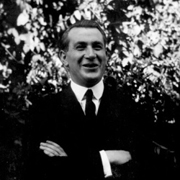
Paulino Suárez Suárez |
|
Paulino Suárez Suárez studied medicine in Santiago de Compostela and Madrid, where he graduated in 1908 and immediately began his doctoral studies, obtaining his Ph.D. on 11 January 1918. He started working as physician in the mining town of Peñarroya (Córdoba). Gradually his work was focusing on the connection between maize and pellagra. The traditional food preparation method of maize required treatment of the grain with lime, an alkali that makes niacin nutritionally available and reduces the chances of developing pellagra. When maize cultivation was adopted worldwide, this preparation method was not accepted because the benefit was not understood and pellagra became a very common disease. Suárez conducted his research at the Institute of Physiological and Pathological Chemistry under Professor Hofminster. He published an article on the etiology of this disease in Biochemische Zeitschrift. With the outbreak of the Great War, Suárez focused his research on the process of water purification and the containment of epidemics. On his return to Spain, he lived in the Residencia de Estudiantes and headed the Laboratory of Bacteriology since 1 January 1921. On June 4 of 1932, he was appointed assistant director of the Residencia. During the Civil War, Negrín entrusted him some sensible diplomatic missions abroad. He went into exile with Negrín and settled in Oxford, invited by Alberto Jiménez Fraud, where he spent some time before he moved to Mexico, and finally to Havana, where he became a professor in the university. He returned with Severo Ochoa to Oxford on one occasion, as executor of Pío del Río-Hortega’s will. In 1960, he returned to his hometown, where he lived until his death. |
| Eugenio Otero |
| Source: El laboratorio de España. La Junta para Ampliación de Estudios e Investigaciones Científicas (1907-1939), catalog. |