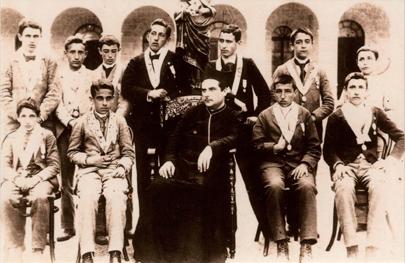
Juan Ramón Jiménez enters Spanish poetry, in his own words, with four free gifts: "sensuality, genius, taste, sight.” But he had to strive in order to acquire the other three, which came with work and reading: "universality, criticism, ideas.” His first steps into the literary world at the end of the century went through successive stages that mark his years of training: his studies at the Jesuit school in El Puerto de Santa María, his studies with painter Salvador Clemente in Seville, his initial literary attempts, the first readings of the French Symbolists during his stay in Castel d'Andorte, and his retreat to Moguer (1905-1912).
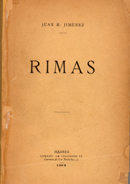
But it was in Madrid, where Juan Ramón arrives in 1900 answering to Rubén Darío’s call “to fight for modernism,” that his literary vocation becomes public. From Ninfeas (1900) to Laberinto (1913), more than a dozen books bear witness to his literary growth that had the “decadent” movement as a starting point and finds his personal way to explore the potential symbolism in the mystic and folk traditions. One can find in his poems from this period a rich repertoire of tools to make writing a form of "sentimental education,” to which the “krausismo” philosophy provided an ethical component that would always be present in hisaesthetics.