1883 Born in Madrid on May 9.
1897 He enrolles in Law and Philosophy at the University of Deusto.
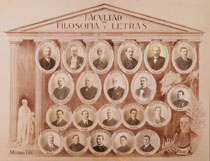
1902 He graduates with a degree in Philosophy and Literature from the Universidad Central. He publishes his first article, "Glosa. A Ramón del Valle-Inclán”, in the Faro de Vigo newspaper.
1904 He receives a PhD in Philosophy with his dissertation, “Los terrores del año mil. Crítica de una leyenda.”
1905-1906 He studies at the Universities of Leipzig and Berlin.
1907 Further studies with neo-Kantian philosophers, Paul Gerhard Natorp and Hermann Cohen at the University of Marburg.
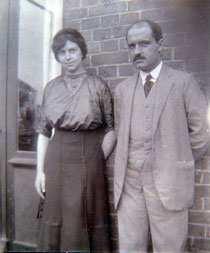
1910 He marries Rosa Spottorno. He is appointed Professor of Metaphysics at the Universidad Central.
1911 The couple returns to Marburg. His first son, Miguel Germán is born.
1913 He organizes together with Juan Ramón Jiménez a tribute to Azorín in Aranjuez. He becomes director of the Philosophy Department at the Center for Historical Studies.
1914 His daughter, Soledad is born. He founds the Liga de Educación Política Española. Meditaciones del Quijote is published.
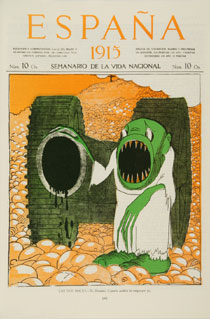
1915 He founds the periodical España. Lectures: “Temas del Escorial” at the Ateneo, and “Muerte y resurrección” at the Residencia de Estudiantes.
1916 He publishes the anthology Personas, Obras, Cosas. First essays of El Espectador. He travels to Argentina to lecture. His son, José is born.
1917 El Espectador vol. II is published. Along with with Nicolás Urgoiti, he founds the newspaper El Sol.
1918-1920 He publishes articles in El Sol. Director of Biblioteca de Ideas del Siglo XX collection, Editorial Calpe.
1921 “Introducción a un “Don Juan.” El Espectador vol. III.
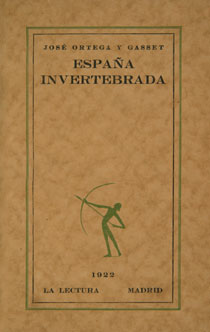
1922 España Invertebrada is published. His father dies in December.
1923 He begins his collaboration with the Argentine newspaper, La Nacion in January. First issue of Revista de Occidente, April. Editorial Calpe published El tema de nuestro tiempo.
1924 He writes the epilogue to Victoria Ocampo’s De Francesca a Beatrice. He publishes the essay “Las Atlántidas.” Editorial Revista de Occidente is born.
1925 El Espectador vol. IV. He teaches a course on "philosophical anthropology" at the Residencia de Señoritas. La deshumanización del arte e ideas sobre la novela is published.
1927 El Espectador, vols. V - VI, and Espíritu de la letra. First articles of La rebelión de las masas.
1928 Second trip to Argentina. El tema de nuestro tiempo is published in German.
1929 He teaches the course “¿Qué es filosofía?” El Espectador, vol.VII.
1930 “Sobre la reforma universitaria,” lecture. La rebelión de las masas is published.
1931 He founds the Agrupación al Servicio de la República. He is elected Member of Parliament representing León. Rectificación de la República is published.
1932 He writes for Crisol and Luz newspapers. The Agrupación al Servicio de la República is disolved. First volumen of Obras, and the essay “Pidiendo un Goethe desde dentro.” La rebelión de las masas is translated into German and English.
1933 He teaches the course “En torno a Galileo (1550-1650). Ideas sobre las generaciones decisivas en la evolución del pensamiento europeo.” He gives a lecture series on “¿Qué pasa en el mundo? (Observaciones sobre nuestro tiempo),” and publishes Guillermo Dilthey y la idea de vida.
1934 El Espectador, vol.VIII. He travels to Germany and visits Edmund Husserl.
1935 Historia como sistema is published in English.
1936 Johan Huizinga invites him to lecture in Holland. The Spanish civil war breaks out, July 18. Two days later, he moves to the Residencia de Estudiantes. He goes into exile on August 30.
1937 He settles in Paris. He published “En la muerte de Unamuno,” in La Nación Lecture series in Holland.
1938 He has surgery for a serious illness.
1939 Long convalescence in Portugal. The Spanish civil war ends. His mother dies. He moves to Buenos Aires.
1940 “Ideas y creencias“, a course taught in 1940 in Buenos Aires, is published as prologue to the much expected Aurora de la razón histórica, a book he never published.
1941 Apuntes sobre el pensamiento, and Estudios sobre el amor. Revista de Occidente re-appeared.
1942 He moves to Lisbon.
1943 He writes “Introducción a Velázquez.”
1944 “La razón histórica,” lecture series at the University of Lisbon.
1945 He returns to Spain and spends the summer in Zumaya (Guipúzcoa).
1946 “Idea del teatro” lecture at Madrid Ateneo. Publication of his complete Obras (six volumes) begins.
1947 He lives in Lisbon and Madrid. He writes La idea de principio en Leibniz.
1948 He founds with Julián Marías the Instituto de Humanidades.
1949 He lectures in America and Europe. The Instituto de Humanidades is closed.
1950 He publishes the essays Papeles sobre Velázquez y Goya.
1951 The University of Glasgow awards him a doctor honoris causa degree. He attends the meetings at Darmstadt, where he met Heidegger. He moves to Munich. He attends the “Rencontres Internationales,” at Geneva.
1952 He returns to Madrid and spends the summer in Fuenterrabía.
1953 Lecture series in Edinburg and London. He attends meetings at Darmstadt to commemorate Karl Jaspers’ 70th birthday.
1954 Lecture in Munich. Doctor honoris causa degree by the University of Marburg.
1955 He gives his last lecture in May, in Venice. He travels to northern Spain. His health deteriorates and he dies on October 18 at his home in Madrid.
|