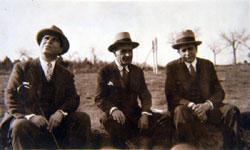
Ortega soon realized that World War I would split European culture into a before and after. His philosophical thought at this time is a constant questioning about what is dying and being born with the 20th century. Ortega was convinced that historical events are like hieroglyphics to be deciphered and saw in “young art” (Dadaism, Ultraísmo, Futurism, and Surrealism) a symptom of what he called "to live up to the times“, and in this young artist the individual who, thanks to his sensitivity, will become a trendsetter of future aesthetics and lifestyles. |